
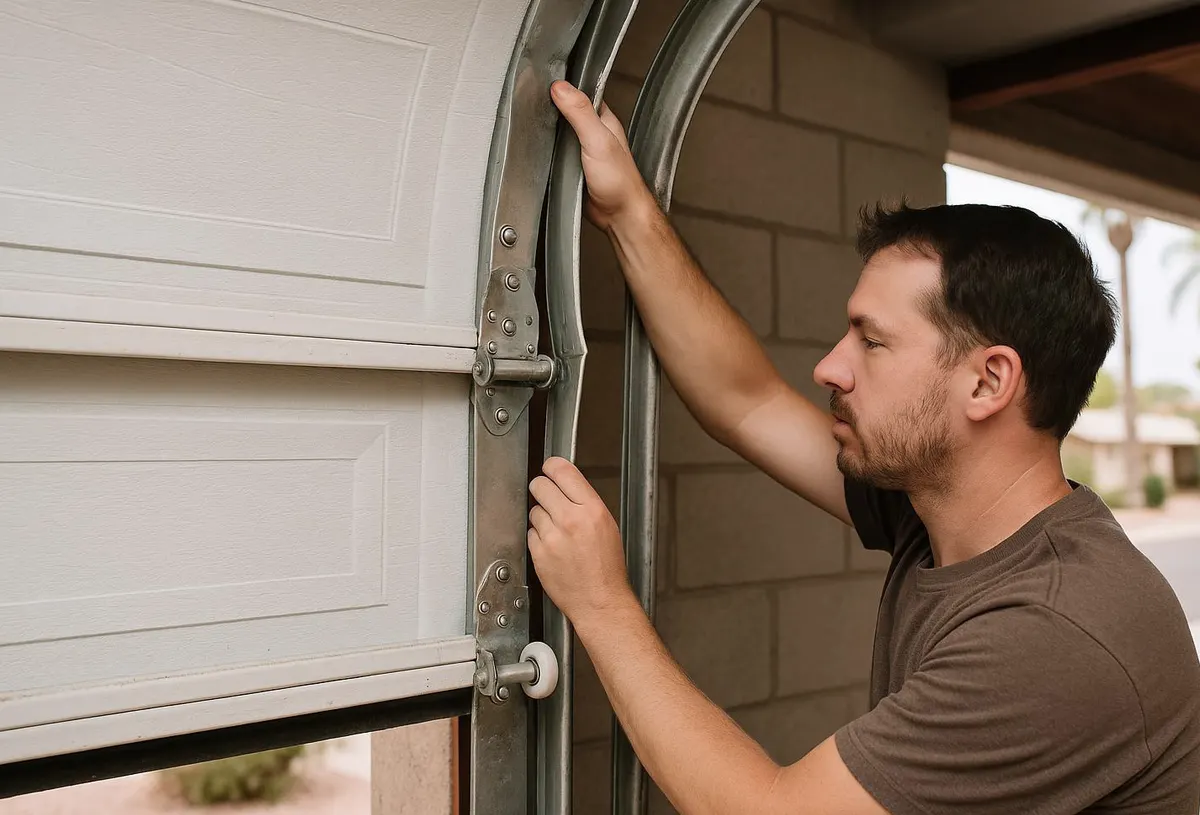
If your garage door reverses halfway down or refuses to close at all, the photo-eye sensors near the bottom of the tracks almost certainly think something is in the way. Nine times out of ten, the fix is a clean lens and a straight beam — no new parts, no service call. But knowing when that's not the problem matters just as much.
What These Sensors Actually Do
Every garage door opener built since the early 1990s has two small sensors mounted about six inches off the floor, one on each side of the track. One sends an invisible infrared beam, the other receives it. As long as that beam is unbroken, the door is cleared to close. Break the beam — with a bike, a pet, a kid, a stray box — and the door stops and reverses instead of coming down on top of whatever tripped it. This is a federally required safety feature, not an optional extra, and it's the single biggest thing standing between a garage door and a serious crush injury.
Why They Act Up More Here Than You'd Expect
In this part of Alabama, the sensors have more working against them than in drier climates. Humidity and afternoon downpours leave a thin film of condensation or dust-turned-grime on the lenses, especially after a storm rolls through and the air stays thick for hours afterward. Hurricane-season winds kick up pollen, leaves, and spider webs that settle directly in the beam's path. Moisture swelling on wood door jambs or garage framing can shift a bracket just enough to throw off alignment over a season or two. And low afternoon sun angling straight into a receiver lens can cause nuisance trips that have nothing to do with dirt at all — just glare the sensor misreads as interference.
Symptoms Worth Paying Attention To
- Door closes partway, stops, then reverses back open
- Door won't close on its own but will close if you hold down the wall button (a manual override that skips the safety check — more on why that's risky below)
- One sensor's indicator light is off, dim, or blinking instead of staying solid
- Door closes fine in the morning but starts acting up only in late afternoon (check for sun glare on the receiver)
How to Clean and Align Them Yourself
- Find both sensors, usually mounted on small metal brackets just above floor level on either side of the track.
- Unplug the opener or switch off power at the breaker before touching anything, so the door can't activate while you're working near it.
- Wipe each lens with a soft, dry cloth or a barely damp microfiber cloth. Avoid anything abrasive — scratched lenses cause the same false trips as dirty ones.
- Check the LED on each unit. Most brands show a solid light when aligned correctly and a blinking or dark light when the beam is broken or misaligned.
- If the light isn't solid, loosen the bracket's thumbscrew slightly and nudge the sensor until the beam lines up straight across to its partner. Small movements matter here — a fraction of an inch can fix it.
- Clear the floor between the sensors of anything that could block the beam, including storage boxes or yard equipment that tend to migrate toward the garage during storm season.
- Tighten the bracket and run the door through several full open-close cycles to confirm it's holding.
When Not to Bypass Them
Some opener models let you hold the wall button down to force the door shut even when the sensors are blocked or disconnected. It's tempting to do this when you're in a hurry or dealing with a sensor that's being stubborn during storm prep. Don't make it a habit. A door that closes without checking its path is a door that can come down on a child, a pet, or your own foot without stopping. It also doesn't fix whatever's actually wrong — a misaligned sensor today can be a corroded wire connection or a failing opener logic board tomorrow, and bypassing the symptom just lets the real problem get worse out of sight.
When to Call Killen Garage Door
If you've cleaned the lenses, realigned the brackets, and the door still won't cooperate, it's likely something electrical — a wire connection corroded by moisture, a failing sensor unit, or an opener board that needs attention. That's where our Garage Door Opener Repair & Installation service comes in, along with routine Garage Door Maintenance to catch alignment drift and wiring wear before it turns into a stuck door during a storm.
If you're searching for a garage door company in Killen, AL, or need Lauderdale County garage door repair before the next round of fall storms rolls through, give Killen Garage Door a call — we'll get your sensors reading clean and your door closing the way it's supposed to.